
Movement · Science · Community
The power
of dance
Movement that transforms
body, mind and emotions
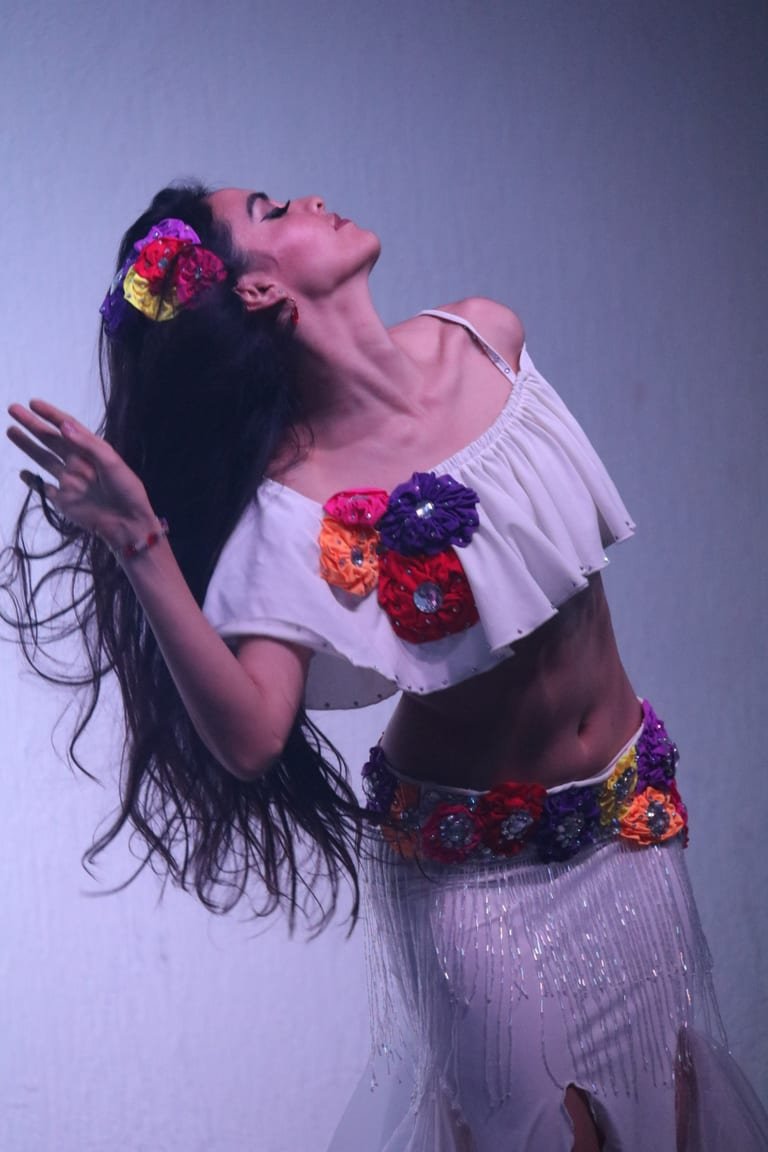
Real benefits
So much more than learning to dance
Dance changes more than the way our bodies move. It asks the brain to learn, remember, anticipate, coordinate, listen, adapt and respond.
As we dance, many systems work together: the nervous system, muscles, balance, breathing, memory, attention, our sense of rhythm and our relationships with the people around us.
That is why dancing is so much more than repeating a choreography.
It is a physical, cognitive, emotional and social experience.
Your brain learns to dance, too
Neuroplasticity
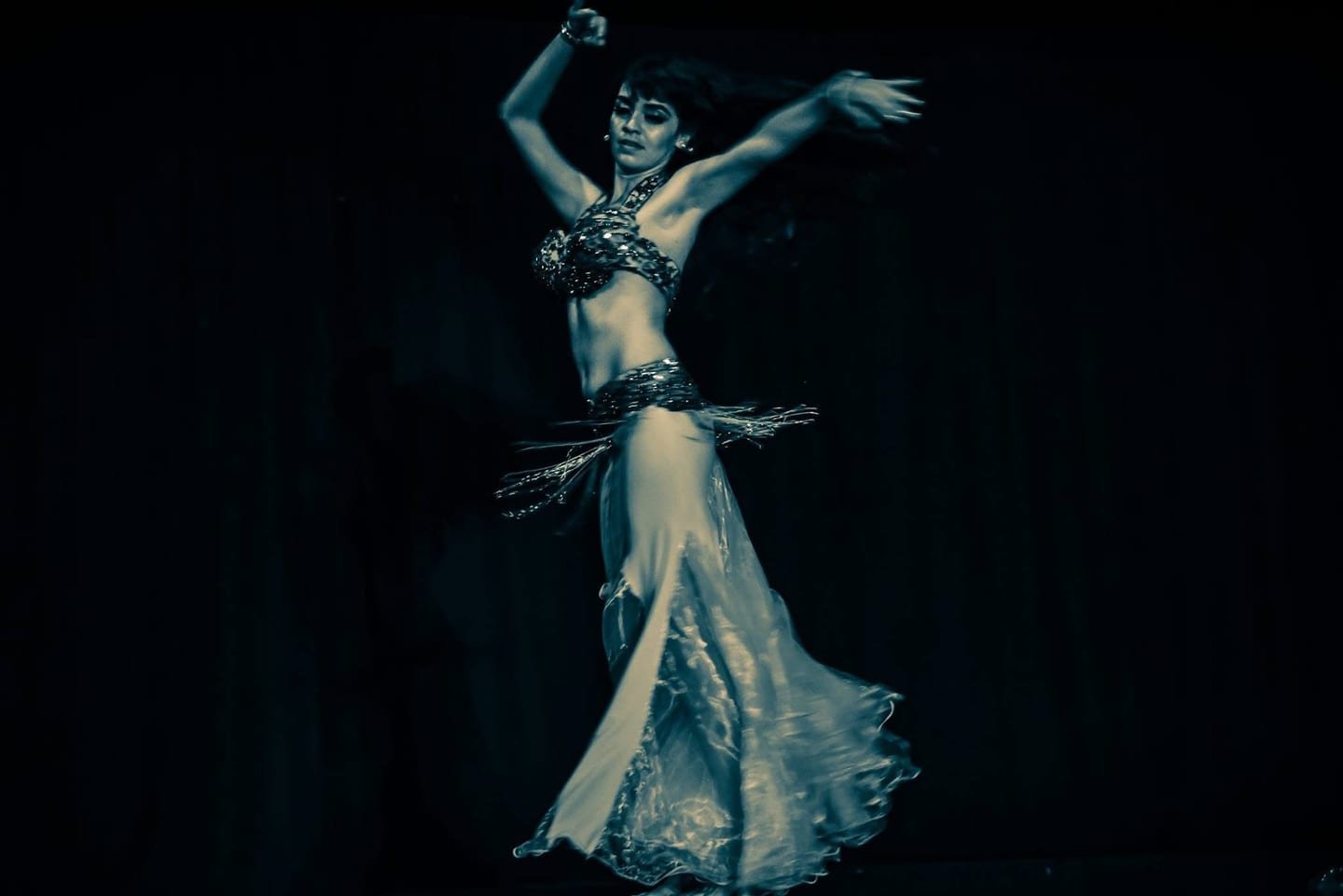
Neuroplasticity is the nervous system’s ability to adapt and change how it functions through experience and learning.
When we learn a new movement, coordinate our arms and pelvis in different directions, recognise a rhythm or repeat a sequence, the brain processes new information and strengthens movement patterns.
Dancing means learning.
Listening. Remembering. Anticipating. Trying. Making mistakes. Adjusting. Repeating.
Eventually, a movement that once demanded all our attention begins to feel natural.
That is neuromotor learning, too.
Your body does not need to know everything. It can begin with one movement.
Coordination and isolation
One distinctive feature of belly dance is moving different parts of the body independently: moving the pelvis while keeping the torso relatively stable; shifting the rib cage without moving the hips; keeping the arms moving while the legs follow another pattern.
We also interpret different elements of the music at the same time. At first, this may feel difficult because the brain has not yet made those combinations automatic. With repetition, the nervous system learns to organise motor information more effectively.
Music, rhythm and the brain
Dance involves more than having music in the background. The brain identifies the pulse, anticipates accents, recognises musical changes and turns sound into movement. It then decides which body part will respond, and how.
Dance combines cognitive, physical and social demands. A review comparing it with other physical activities found similar results on several measures and preliminary advantages for motivation, aspects of memory and social cognition. For other outcomes, including stress and self-efficacy, preliminary evidence favoured other activities. No single activity is best for everything.
From stress towards regulation
A space to return to yourself
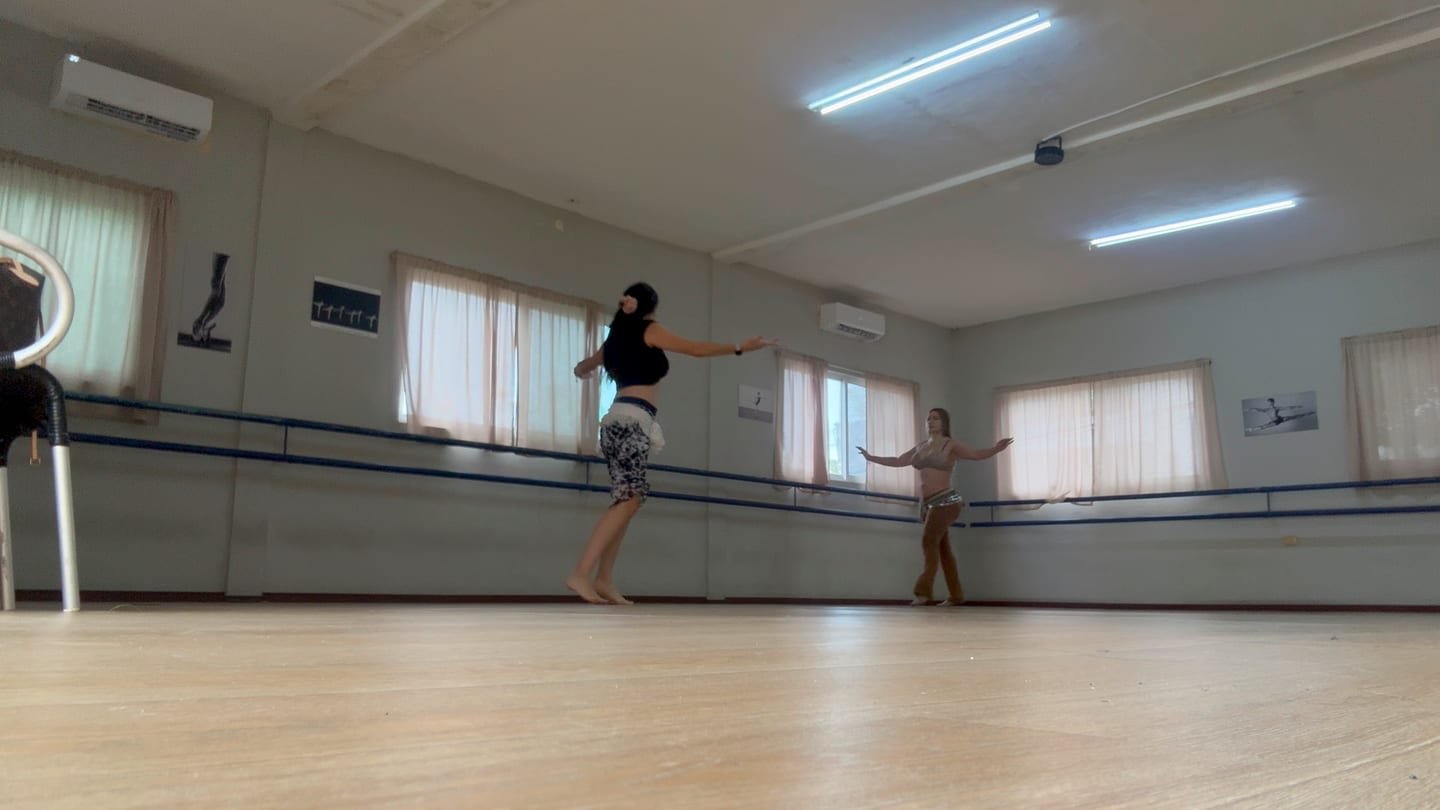
Under stress, the body activates systems that help us respond to a threat. These include the autonomic nervous system and the hypothalamic–pituitary–adrenal axis, which is involved in cortisol release.
Cortisol is essential to human functioning. Difficulties can arise when we spend long periods in states of heightened alertness and tension.
Dance brings together movement, music, breathing, concentration, learning, expression and social interaction. Many people describe feeling more present, releasing tension or returning to themselves after dancing.
What happens while we dance
Regulation is a more accurate description than “resetting” the nervous system. Movement does not switch it off: it offers new information.
Attention shifts towards music and movement. Breathing changes. Muscles alternate between contraction and relaxation. The brain solves motor tasks and the body moves through space, often in company.
Together, these experiences temporarily change the demands placed on the body.
Listen to the music. Feel your support. Find your own rhythm.
Cortisol, stress and movement
The relationship between physical activity and cortisol is complex. Intense exercise can temporarily increase cortisol as part of the normal response to exertion.
Regular activity has been associated with some more favourable cortisol patterns, but findings vary by population, activity and measurement. The 2023 review found a small association with daily cortisol slope, without clear differences in the awakening response.
We cannot promise that a dance class will always lower cortisol. Regular movement can be one part of a broader approach to managing stress.
- Read study · 2023 — Physical activity and cortisol regulation: A meta-analysis. Opens in a new tab
- Read study · 2022 — The effects of physical activity on cortisol and sleep: A systematic review and meta-analysis. Opens in a new tab
- Read study · 2025 — The Optimal Exercise Modality and Dose for Cortisol Reduction in Psychological Distress: A Systematic Review and Network Meta-Analysis. Opens in a new tab
Marian Rojas Estapé and the state of alertness
Psychiatrist and science communicator Marian Rojas Estapé discusses the relationships between stress, thoughts, emotions, the body and health. Her public work covers anxiety, calm, the brain and cortisol.
At Bellydance Club, we use this perspective as context. Statements about dance and physiology rely primarily on peer-reviewed research. This mention does not imply a collaboration or endorsement by the specialist.
Dance and emotional health
A meta-analysis of 28 randomised clinical trials involving 2,249 participants found reductions in symptoms of depression, anxiety and stress associated with dance interventions. The certainty of the evidence was low or very low.
Other reviews reported favourable findings in adults and some older populations, with methodological limitations. The studies cover different forms of dance and do not, by themselves, establish the effects of a particular belly dance class.
Dance can add movement, expression, learning, social connection and enjoyment to life. It does not replace medical or psychological care.
- Read study · 2021 — The effect of dancing interventions on depression symptoms, anxiety, and stress in adults without musculoskeletal disorders: An integrative review and meta-analysis. Opens in a new tab
- Read study · 2023 — Evidence of the Effects of Dance Interventions on Adults Mental Health: A Systematic Review. Opens in a new tab
- Read study · 2024 — Effect of Dancing Interventions on Depression and Anxiety Symptoms in Older Adults: A Systematic Review and Meta-Analysis. Opens in a new tab
Learning in good company
Dancing together changes the experience
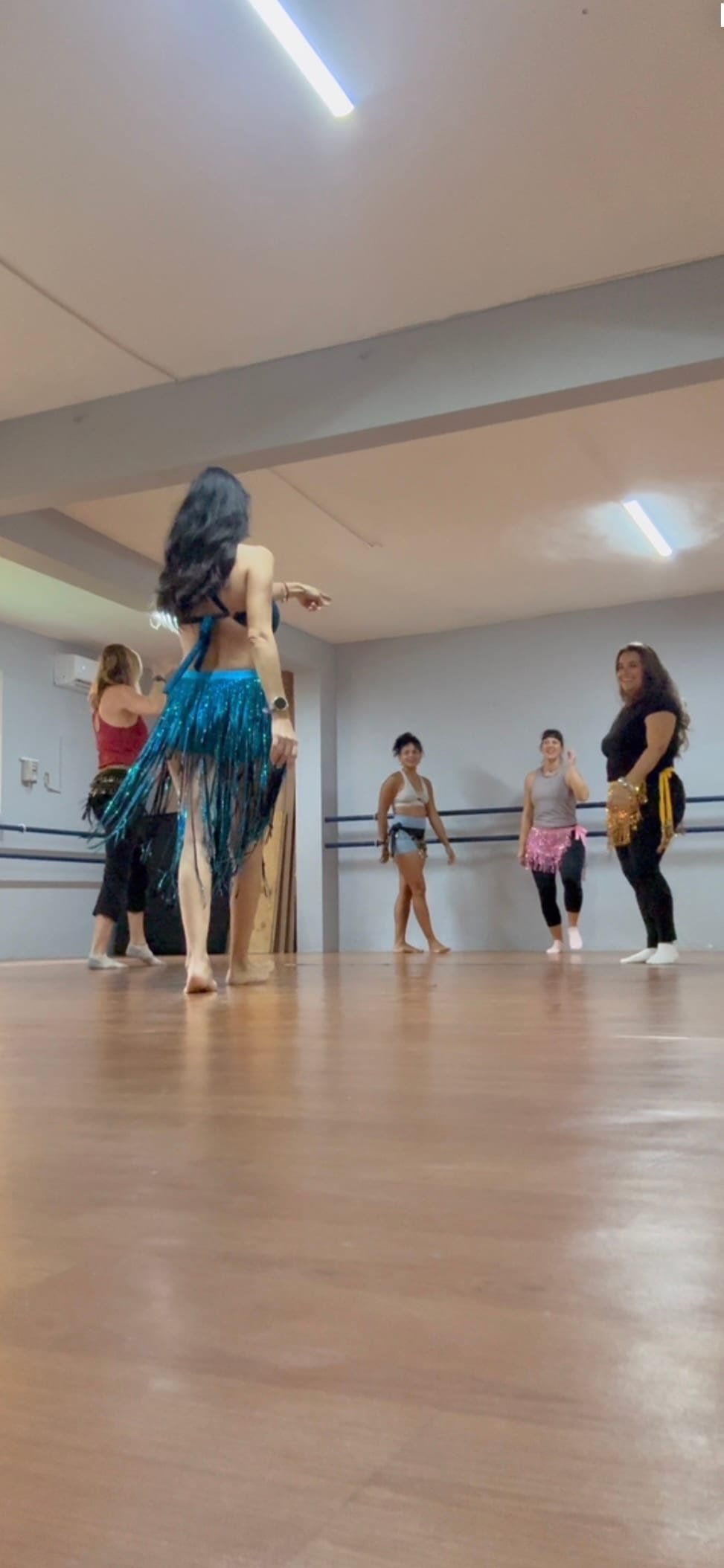
We do not learn in a dance class only by listening to instructions. We observe, imitate, compare, adjust and feel.
What we call somatic mimesis here describes learning through the body: observing another person’s movement, trying to reproduce it and adapting it to our own body.
It does not mean becoming a copy of another dancer. It means using visual, auditory and bodily information to expand our own movement possibilities.
From movement you see to movement you feel
Watching another woman move gives us information about position, rhythm, direction and coordination. We then need to turn that information into an action of our own.
Every body finds its own way to learn. Watching, trying and adjusting are all part of the process.
A shared rhythm
Interpersonal synchrony happens when we adjust our movements to one another and to a shared rhythm. A study of collective dance found that both music and visual interaction between people contribute to synchronisation.
In an Oxford experiment, people who danced in synchrony reported greater social closeness. Their pain thresholds also increased: an indirect measure associated with endorphin activity, rather than a direct measurement of endorphins.
Dancing together can help us feel part of something.
Other women can change our mirror, too
Our perception of our bodies is not formed only in front of a mirror. It is also shaped by the people around us.
In a studio filled with different ages, bodies, stories and experience levels, the idea of what a dancer should look like can begin to shift. We see women learning, making mistakes, trying again, laughing and moving with sensuality without fitting a single physical ideal.
Little by little, we may give ourselves that same permission. Through stress, grief, motherhood or personal change, a group can offer companionship. Not because we are all living the same story, but because we do not have to go through it entirely alone.
Self-perception can grow, too
A woman may arrive thinking: “I have no coordination”, “I am too big”, “I am too old to start”, “My body is not the same anymore” or “I cannot move like that”.
Then she learns one movement. Then another. One day, she discovers her body can do something she once thought impossible.
That discovery does not necessarily change her body. It changes her relationship with it. The body becomes more than something to observe or judge: it learns, responds, creates and expresses itself.
Your relationship with your body can change.
Breathing · Posture · Movement
The core: much more than abs
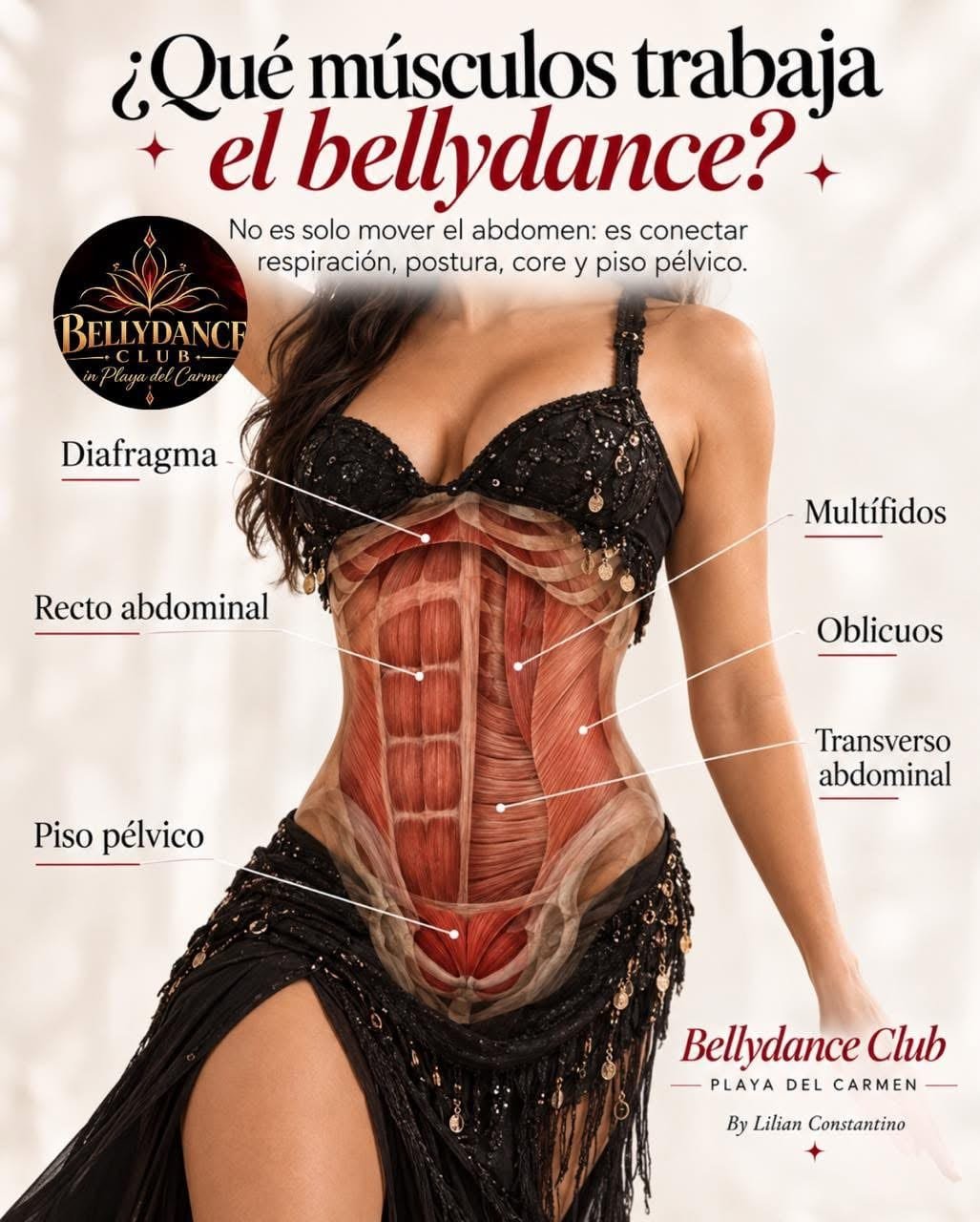
The core is more than the visible abdominal muscles. It is a muscular and neuromuscular system involved in controlling the spine, pelvis, breathing and the transfer of forces during movement.
Belly dance alternates mobility and stability: moving the pelvis with a relatively steady torso, shifting the rib cage while the legs maintain balance, and exploring circles, figure eights, undulations and changes of weight.
These movements involve coordination across the lumbopelvic region. The explanations below describe general functions; they do not demonstrate a specific therapeutic effect of belly dance.
Transversus abdominis
One of the deep muscles of the abdominal wall, it works with other structures to contribute to trunk control and intra-abdominal pressure.
When the pelvis moves beneath a relatively stable torso, the abdomen helps control that movement. The aim is to find stability while preserving movement and breathing, rather than maintaining constant rigidity.
Multifidus muscles
These deep muscles lie at the back, alongside the spine. They contribute to control of individual spinal segments.
Isolations involve allowing movement in some regions while maintaining control in others. Muscle involvement varies with the movement and the person.
Diaphragm
Alongside its breathing role, the diaphragm helps regulate intra-abdominal pressure and works in coordination with the abdominal wall and pelvic floor.
Breathing as we move is different from holding our breath and bracing constantly. Practice aims to bring breathing, posture and movement together.
Pelvic floor
The pelvic floor contributes to support of pelvic organs, continence and pressure management. It interacts with the abdominal muscles, but this relationship can vary between people and conditions.
The cited review found insufficient evidence for replacing specific pelvic floor training with isolated transversus abdominis work in women with urinary incontinence.
Exploring pelvic movement may support body awareness. Belly dance does not replace pelvic health physiotherapy. Pain, leakage, a feeling of heaviness or complicated postpartum recovery call for specialist assessment.
Psoas
The psoas major is a deep muscle connecting the lumbar region to the femur. It is particularly involved in hip flexion and lumbopelvic mechanics; its stabilising role is complex.
In dance, it contributes to actions such as weight changes, travelling steps, hip flexion and single-leg support.
It is not a button that “resets” the nervous system. The cited biomechanical review does not demonstrate that releasing the psoas releases trauma. Moving, breathing, coordinating and sharing music provides sensory information and may accompany a feeling of reduced tension; it is not a treatment for trauma.
Obliques
The internal and external obliques contribute to rotation, side bending and trunk stability. They work within actions such as figure eights, circles, rotations and isolations between the rib cage and pelvis.
Technique invites us to recognise where we need mobility and where we need stability.
A system, not isolated muscles
Imagine the deep core as a three-dimensional structure: the diaphragm above, the abdominal wall around it, deep spinal muscles behind, and the pelvic floor below.
These structures adjust to posture, breathing and movement. Dance involves more than practising a contraction. We practise transitions: finding stability, relaxing, breathing, moving, changing direction and finding stability again.
It is not about contracting more.
A constantly rigid abdomen does not necessarily mean a functional core. We need to be able to activate, relax, breathe, stabilise and move at the appropriate moment.
Mindful practice can help us explore that body awareness.
It is about coordinating better.
A dance that evolves with you
There is always more to discover
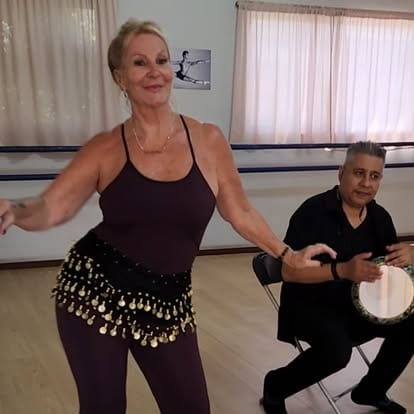
Dance may mean something different at each stage of life. There is no single right age to begin.
There is the body you have today. And the possibility of discovering what it can still learn.
Adolescence
A space for expression, confidence and discovery, with guidance and age-appropriate practice.
Adulthood
An opportunity for coordination, sensuality and discovery. Time of your own to listen to your body and explore new ways of moving.
Motherhood
A chance to reclaim personal space and rebuild a relationship with a body that has experienced major changes. Returning to movement should follow each woman’s recovery and individual professional advice.
Later life
An opportunity to keep learning, moving, socialising and challenging the brain, with intensity and movements adapted to the individual.
Our philosophy
The body you have today
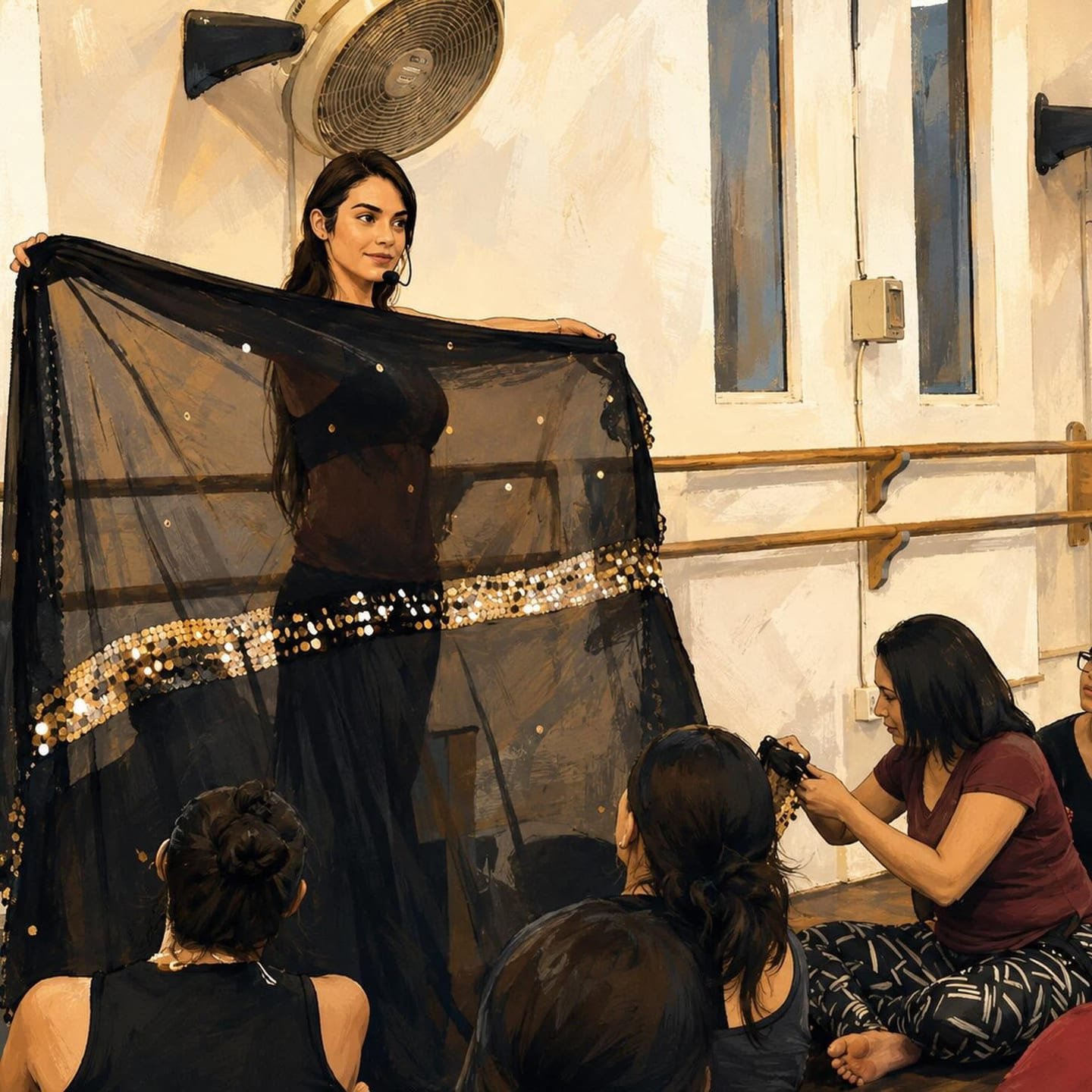
At Bellydance Club Playa del Carmen, this information helps us understand something simple: the human body has the capacity to learn and move.
When movement, music, coordination, learning, expression and community come together, many things happen at once.
For us, belly dance can accompany a woman through different moments of her life. Practice reaches beyond preparing a choreography for the stage.
A space to learn in your own way
We do not promise cures or present dance as a replacement for medicine, physiotherapy or psychotherapy. We offer a space for movement, learning and community.
You do not need to return to the body you had before. You do not need to look like another woman. You do not need to become a professional dancer.
You can discover how the body you have today dances.
And you can do it in good company.
Alongside other women who are evolving, too. With time to learn, permission to make mistakes and space to find your own rhythm.
Your story can begin here, too
One movement.One possibility.Your own beginning.
Come and discover what your body can still learn, alongside other women.
Scientific references
The research covers different dance styles, populations and interventions. Results do not guarantee individual outcomes or validate a specific club class. Marian Rojas Estapé’s public communication is included as context, separate from the evidence on dance.
Explore the sources 15
- Dance for neuroplasticity: A descriptive systematic review (2019) ↗ — Opens in a new tab
Dance and structural or functional changes in adult brains.
- Structural and functional neuroplasticity in music and dance-based rehabilitation: a systematic review (2025) ↗ — Opens in a new tab
Music- and dance-based rehabilitation in neurological populations; limits to generalisation.
- The Effectiveness of Dance Interventions on Psychological and Cognitive Health Outcomes Compared with Other Forms of Physical Activity: A Systematic Review with Meta-analysis (2024) ↗ — Opens in a new tab
Comparison with other physical activities: benefits and mixed findings.
- The effect of dancing interventions on depression symptoms, anxiety, and stress in adults without musculoskeletal disorders: An integrative review and meta-analysis (2021) ↗ — Opens in a new tab
28 trials and 2,249 participants; low or very low certainty of evidence.
- Evidence of the Effects of Dance Interventions on Adults Mental Health: A Systematic Review (2023) ↗ — Opens in a new tab
Review of different dance modalities and adult mental health.
- Effect of Dancing Interventions on Depression and Anxiety Symptoms in Older Adults: A Systematic Review and Meta-Analysis (2024) ↗ — Opens in a new tab
Findings in older adults; limited certainty and differences by comparator.
- Physical activity and cortisol regulation: A meta-analysis (2023) ↗ — Opens in a new tab
Small association with daily cortisol slope; does not establish causality.
- The effects of physical activity on cortisol and sleep: A systematic review and meta-analysis (2022) ↗ — Opens in a new tab
Ten studies, predominantly in people with breast cancer; limited generalisability.
- The Optimal Exercise Modality and Dose for Cortisol Reduction in Psychological Distress: A Systematic Review and Network Meta-Analysis (2025) ↗ — Opens in a new tab
Exercise and cortisol in adults with psychological distress; not belly-dance-specific.
- Silent disco: dancing in synchrony leads to elevated pain thresholds and social closeness (2016) ↗ — Opens in a new tab
Experiment on synchrony and social closeness; endorphin activity assessed indirectly.
- The geometry of interpersonal synchrony in human dance (2024) ↗ — Opens in a new tab
Contributions of music and visual interaction to synchronisation.
- Evidence for benefit of transversus abdominis training alone or in combination with pelvic floor muscle training to treat female urinary incontinence: A systematic review (2009) ↗ — Opens in a new tab
Does not support replacing pelvic floor training with isolated transversus work.
- Psoas muscle and lumbar spine stability: a concept uniting existing controversies. Critical review and hypothesis (2000) ↗ — Opens in a new tab
Biomechanical analysis and hypothesis; not a study of trauma release.
- Core Stabilization Exercise Prescription, Part I: Current Concepts in Assessment and Intervention (2013) ↗ — Opens in a new tab
Anatomical and biomechanical context for the core; debate over training strategies.
- Marian Rojas Estapé · Sobre mí () ↗ — Opens in a new tab
Public communication and context. Not clinical evidence for a dance class.